
What Is the Sacroiliac Joint?
Sacroiliac Joint is the connection between the sacrum at the base of the spine and the ilium of the pelvis. This joint transfers forces between the upper body and legs while allowing limited movement. Irritation, restricted motion, or nearby muscle tension can contribute to pain felt in the lower back, buttock, or hip.
Quick Facts About Sacroiliac Joint
Category
Pelvic joint
Used for
Assessing lower-back and pelvic movement
Common confusion
Often confused with sciatic nerve pain
Also called
SI Joint, Sacroiliac articulation
Often discussed with
Back Pain Treatment, Chiropractic Adjustments
Key Takeaways About Sacroiliac Joint
- It connects the sacrum with each side of the pelvis.
- Pain may feel like lower-back, buttock, or hip discomfort.
- Sacroiliac joint pain is not the same as sciatica.
How Sacroiliac Joint Works
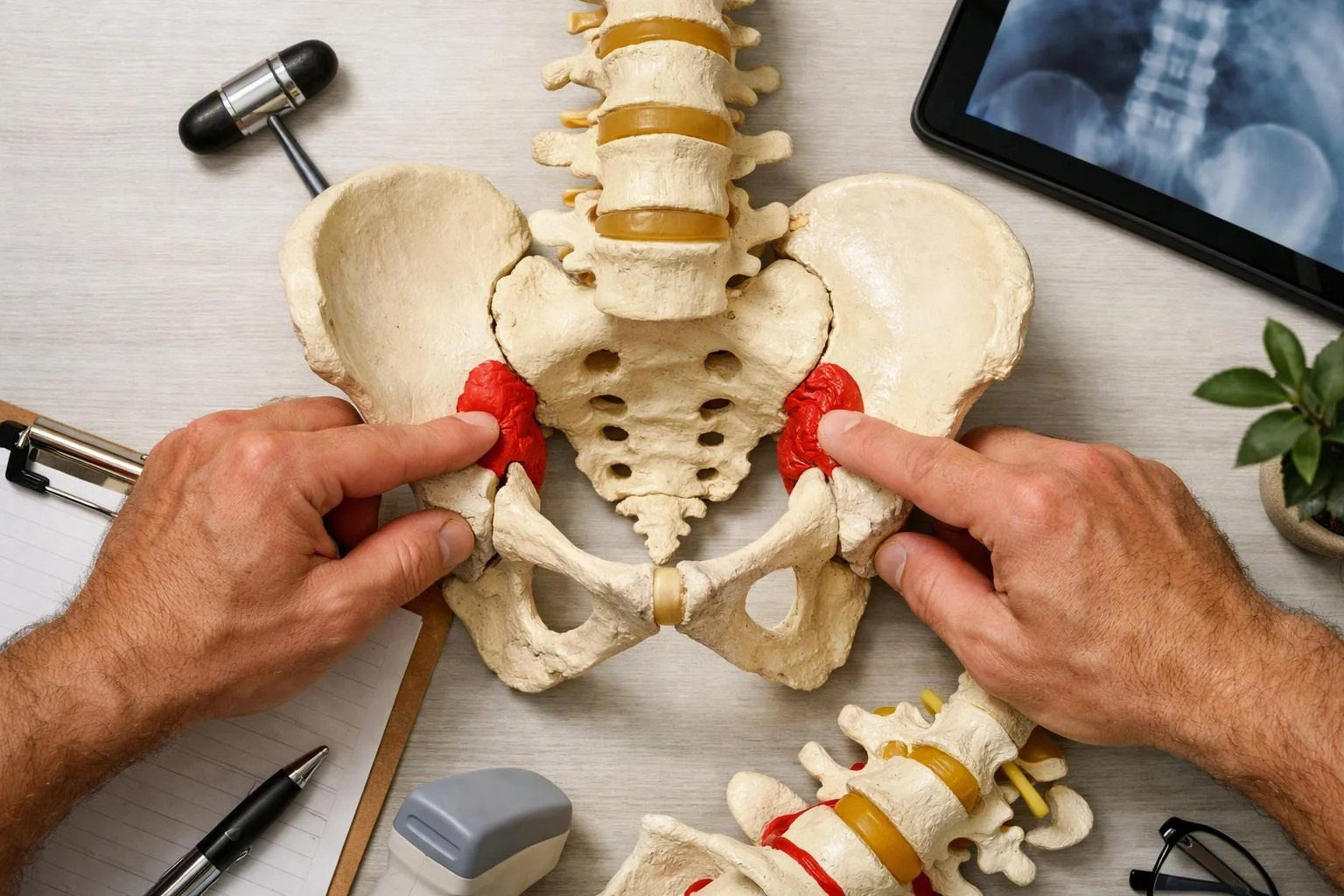
The sacroiliac joint joins the sacrum to the pelvis and helps distribute load during standing, walking, and changing position. Strong ligaments support the joint, while small movements allow the pelvis and spine to respond to activity. The joint works with the lumbar spine, hips, and surrounding muscles.
Related glossary terms: Lumbar Spine, Joint Restriction, Sciatic Nerve.
Clinicians consider the location of symptoms, movement patterns, tenderness, and nearby joint or muscle findings when checking this area. Sciatic nerve symptoms follow a different nerve pathway, so buttock or leg pain does not automatically identify the sacroiliac joint as the source. A careful evaluation separates joint findings from spinal, hip, and soft-tissue concerns.
From the Arrowhead Clinic Chiropractor Hinesville team
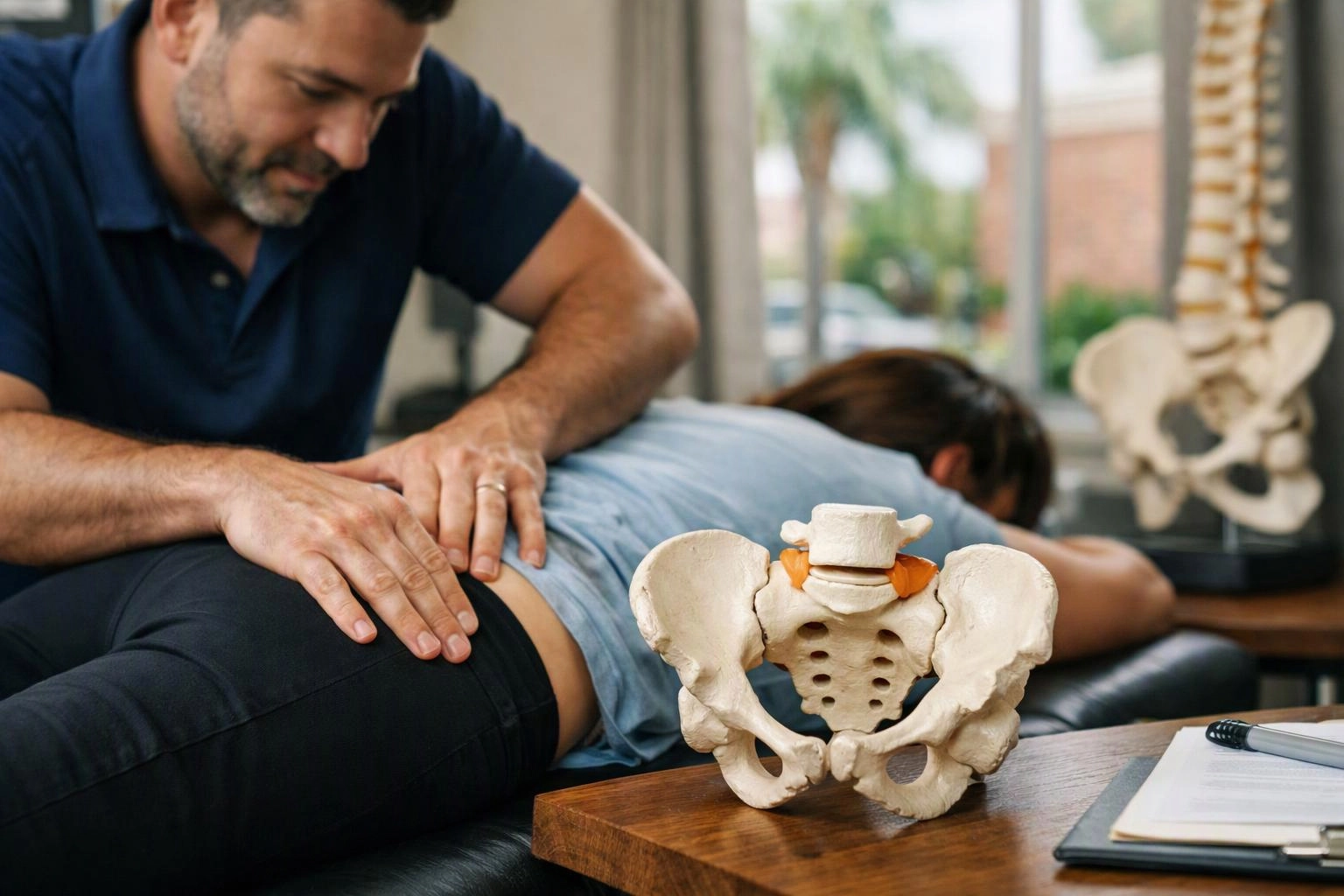
When we assess the sacroiliac joint, we review how the lower back, pelvis, hips, and surrounding muscles move together. We also compare the reported pain pattern with examination findings. Our approach keeps the joint in context instead of treating every episode of lower-back or buttock pain as a sacroiliac problem.
Sacroiliac Joint in Practice: A Real-World Example
A person receiving Back Pain Treatment may report one-sided pain near the belt line that worsens during transitions from sitting to standing. We may examine pelvic motion, nearby muscle tension, and lumbar spine findings to understand whether the sacroiliac joint is involved.
Related Services
Related Terms
Lumbar Spine
The lumbar spine is the lower section of the spinal column between the thoracic spine and…
Joint Restriction
A joint restriction is a clinical description of reduced or altered movement in a joint. It…
Sciatic Nerve
Sciatic Nerve is the body’s largest peripheral nerve, formed by nerve roots in the lower spine…
Range of Motion
Range of Motion is the available movement of a joint or body part in a specific…
Arrowhead Clinic Chiropractor Hinesville
Have Questions About Sacroiliac Joint?
Contact Arrowhead Clinic Chiropractor Hinesville for practical guidance on Sacroiliac Joint and related chiropractor work in Hinesville.