
What Is Spinal Alignment?
Spinal Alignment is the arrangement and movement relationship of the vertebrae, joints, and supporting tissues along the spine. The term describes how these structures relate to one another during standing, sitting, and movement. Chiropractors assess alignment through posture, joint motion, and physical findings, not through appearance alone.
Quick Facts About Spinal Alignment
Category
Spinal structure and movement
Used for
Posture and joint assessment
Common confusion
Not identical to a straight spine
Also called
Vertebral Alignment, Spinal positioning
Often discussed with
Chiropractic Adjustments
Key Takeaways About Spinal Alignment
- Alignment concerns relationships among spinal structures during movement.
- Assessment includes posture, joint motion, and physical findings.
- Alignment is not the same as a perfectly straight spine.
How Spinal Alignment Works
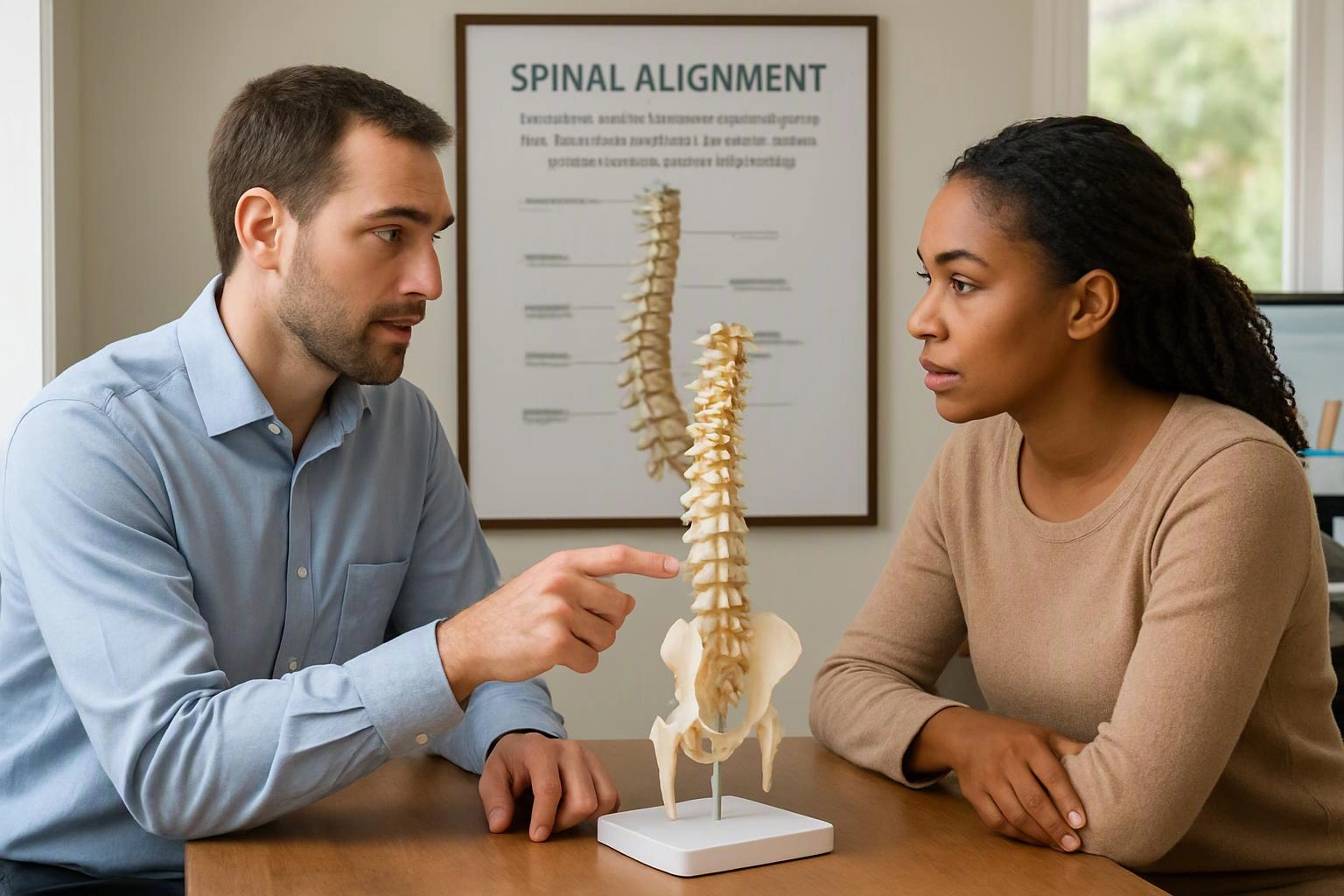
Spinal Alignment describes how the vertebrae, discs, joints, muscles, and connective tissues relate as the body holds a position or moves. The spine naturally includes curves that help distribute forces. A useful assessment considers those curves, the position of nearby joints, and how easily each region moves.
Related glossary terms: Neutral Spine, Vertebra, Joint Restriction.
A chiropractor may observe posture, compare movement on each side, and examine areas that feel restricted or sensitive. Joint Restriction can affect how one spinal region moves while nearby areas compensate. An adjustment applies a controlled force to a selected joint to support its normal motion. Alignment findings guide the area and technique, but they do not describe a permanent position or guarantee a specific result.
From the Arrowhead Clinic Chiropractor Hinesville team
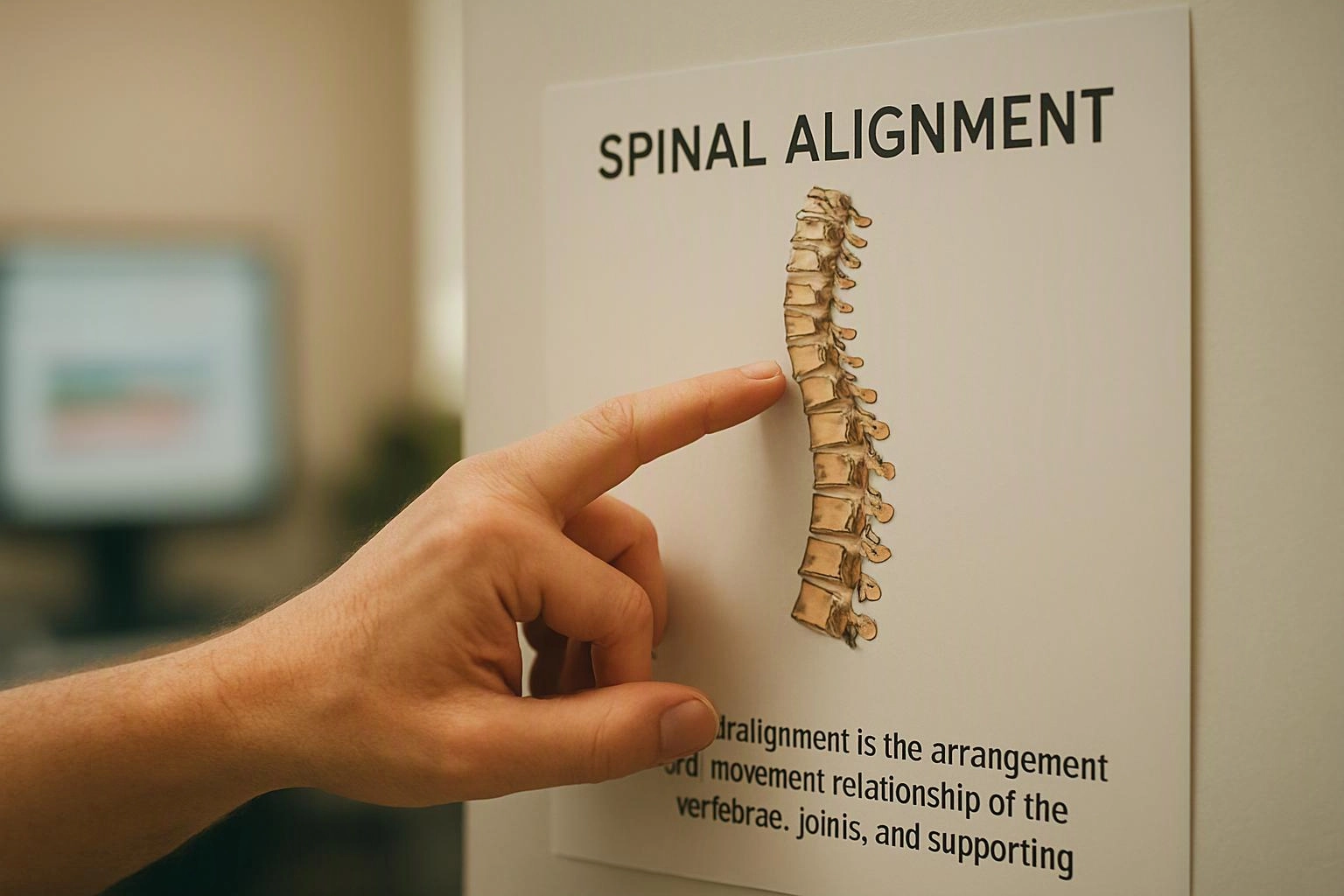
When we assess spinal alignment, we combine posture observations with movement checks and a focused physical examination. During Chiropractic Adjustments, we use those findings to identify joints whose motion may not match the surrounding area. We document practical changes in movement and symptoms without treating alignment as a single visual measurement.
Spinal Alignment in Practice: A Real-World Example
A person who spends much of the day at a desk may show a forward head position and limited upper-back movement. During Chiropractic Adjustments, the provider may assess the cervical and thoracic regions before selecting a technique that matches the examination findings.
Related Services
Related Terms
Neutral Spine
Neutral Spine is a balanced position in which the spine keeps its natural curves while the…
Vertebra
Vertebra is a single bone in the spinal column. Each vertebra helps form the spine, supports…
Joint Restriction
A joint restriction is a clinical description of reduced or altered movement in a joint. It…
Forward Head Posture
Forward Head Posture is a postural pattern in which the head rests ahead of the shoulders…
Arrowhead Clinic Chiropractor Hinesville
Have Questions About Spinal Alignment?
Contact Arrowhead Clinic Chiropractor Hinesville for practical guidance on Spinal Alignment and related chiropractor work in Hinesville.