Sports Injury Care: Chiropractic, Exercise, and Return to Activity
Sports injury care combines chiropractic treatment, therapeutic exercise, physical therapy, and massage when each addresses a different recovery need; Arrowhead Clinic Chiropractor Hinesville evaluates movement and helps coordinate a gradual return to activity.
Request an Estimate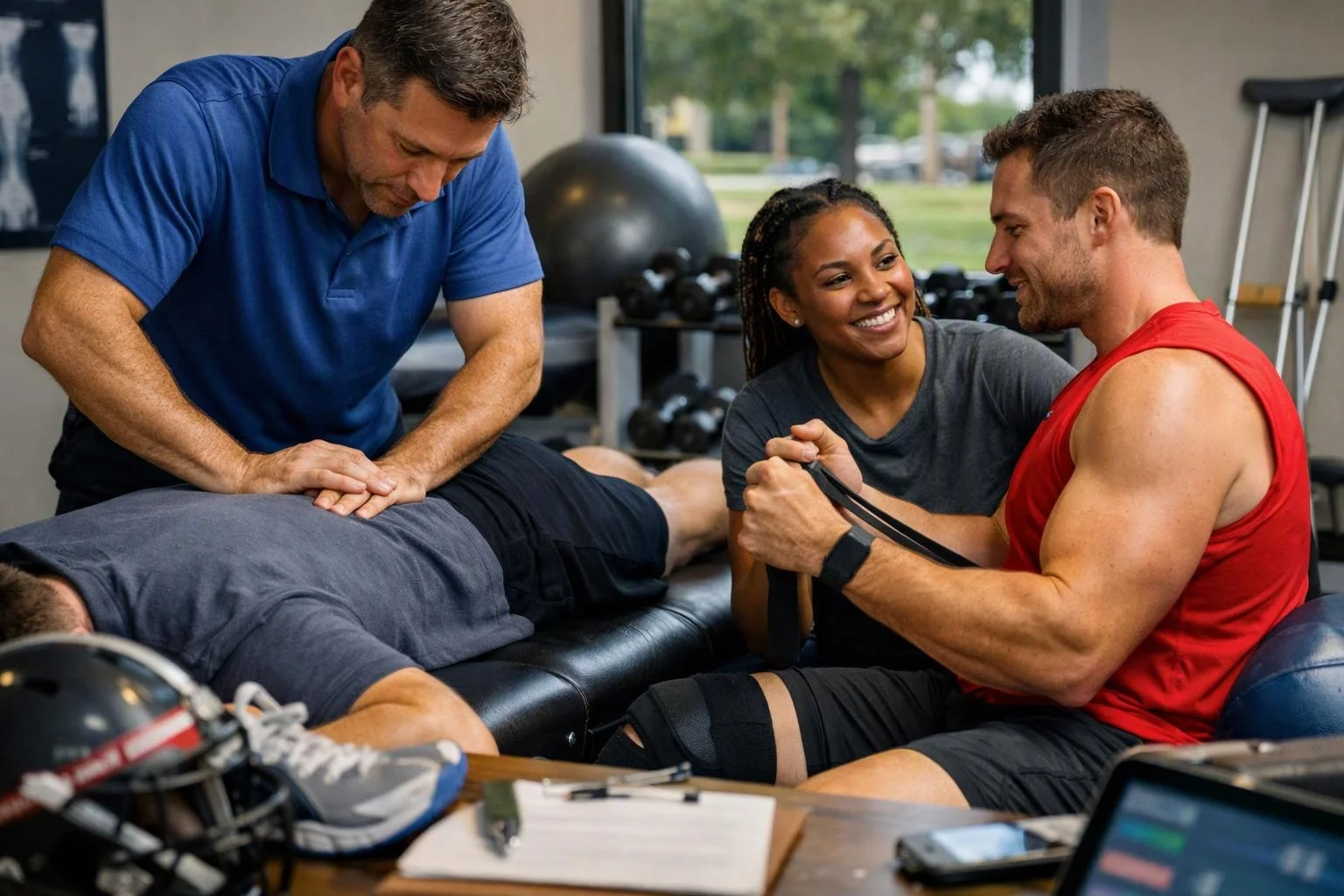
Chiropractic treatment for sports injuries supports pain management, movement restoration, therapeutic exercise, and return to activity when the care matches the injury findings. We begin with a movement assessment to understand how joint mobility, soft tissue, strength, and control affect your activity.
Sports Injury Treatment may include chiropractic adjustments, exercise progression, activity modification, or coordination with physical therapy and massage therapy. Our team explains the role of each service so your care plan remains focused on your recovery goals.
Can Chiropractic Care Help With a Sports Injury?
Yes, chiropractic care can help selected sports injuries by addressing restricted movement, joint mechanics, and related musculoskeletal discomfort after an appropriate evaluation.
Sports injuries can affect joints, muscles, tendons, and other parts of the musculoskeletal system. We assess how the injury changes movement and whether joint mobility or soft tissue comfort limits normal activity.
Our care may include appropriate manual techniques and chiropractic adjustments when the findings support them. We also explain when therapeutic exercise or coordinated care is needed to build lasting movement control.
When Chiropractic Care and Exercise Belong Together
Chiropractic care and therapeutic exercise work best together when hands-on care improves movement and exercise helps you control and maintain that movement.
Hands-on care can address a movement restriction, while active rehabilitation helps your body use that movement during daily tasks and sport. We use the evaluation findings to decide how these services fit your sports injury recovery.
How Chiropractic Care, Physical Therapy, and Massage Differ
Chiropractic care, physical therapy, and massage support different parts of sports injury recovery, so the most suitable combination depends on the findings and activity goal.
Our sports injury assessment helps identify whether the main limit involves joint movement, strength, balance, motor control, or soft-tissue comfort. The services can then be used with clear roles in the care plan.
| Service | Primary role | Best fit | Relationship to exercise |
|---|---|---|---|
| Chiropractic care | Evaluates and addresses joint movement and musculoskeletal function through clinical assessment and appropriate manual care. | Movement restrictions, joint-related discomfort, and mechanics that affect activity. | May help prepare movement for an exercise plan. |
| Physical therapy | Builds functional capacity through movement retraining, strengthening, balance work, and activity progression. | Loss of strength, control, endurance, or confidence during recovery. | Uses therapeutic exercise as a central part of rehabilitation. |
| Massage therapy | Addresses soft-tissue tension and comfort as part of a broader recovery plan. | Muscle tightness, post-activity recovery needs, and soft-tissue support. | Can complement exercise when tissue comfort affects movement. |
How These Services Work Together During Recovery
These services work together when each service has a defined role in improving movement, building capacity, or supporting comfort.
Our team coordinates the care plan around your injury findings and activity demands. Cost depends on the services needed, the injury findings, and the goals for returning to activity.
How We Assess Progress Toward Returning to Activity
Progress toward returning to activity is assessed by comparing symptoms, movement quality, physical capacity, and tolerance for gradually increased demands.
We look at more than pain alone. A safe training progression also considers range of motion, strength, balance, movement control, and sport-specific movement.
What to Consider Before Choosing a Recovery Approach
The right recovery approach depends on the injury, the activities you need to resume, the movements that provoke symptoms, and the capacity you need to rebuild.
We match the care plan to your symptoms and recovery goals. The choice between chiropractic care, physical therapy, and massage depends on which limits are found during assessment.
How Arrowhead Clinic Chiropractor Hinesville Builds a Sports Injury Care Plan
Arrowhead Clinic Chiropractor Hinesville builds sports injury care around the findings, the activity goal, and the combination of services that addresses the recovery needs.
We begin with a sports injury evaluation of symptoms, movement, and activity demands. Our team then explains whether chiropractic adjustments, therapeutic exercise, physical therapy, massage therapy, or a coordinated combination fits the findings.
We outline what the recommended care includes and explain how to obtain an exact quote before care is arranged. Free Consultations are available as an owner-provided option for starting the conversation about your needs.
Questions About Sports Injury Recovery
Can chiropractic care and physical therapy be used together for a sports injury?
Yes, chiropractic care and physical therapy can be used together when the evaluation shows that mobility care and active rehabilitation address different recovery needs. Arrowhead Clinic Chiropractor Hinesville can help coordinate chiropractic adjustments with therapeutic exercise, movement retraining, and activity progression.
Can massage therapy help with muscle tightness after sports activity?
Yes, massage therapy can support comfort when muscle tightness or soft-tissue tension affects movement after sports activity. Massage works best as part of a broader care plan when exercise and movement work are also needed.
What should I bring to a sports injury evaluation?
A sports injury evaluation benefits from your injury history, current symptoms, activity demands, recovery goals, and information about movements that increase discomfort. Bring any relevant care information you have so our team can better understand the problem and plan the movement assessment.
When should an athlete pause training during injury recovery?
An athlete should pause or modify training when pain response, movement quality, strength, balance, or activity tolerance worsens during or after activity. We assess those changes and help adjust the care plan before training demands increase again.
Sports injury care works best when mobility, exercise, soft-tissue comfort, and activity progression are connected to the same recovery goal. Contact Arrowhead Clinic Chiropractor Hinesville to discuss your sports injury evaluation and request an exact quote for the recommended care.
Contact our team about sports injury careRelated Resources
First Chiropractic Appointment Checklist: What to Bring and Do Before Your Visit
What's RequiredWorkers' Compensation Chiropractic Treatment Checklist: Documents and Steps to Prepare
What's RequiredPrenatal Chiropractic Appointment Checklist: Questions and Safety Details to Prepare
Brand vs BrandChoosing Arrowhead Clinic or Another Chiropractor in Hinesville