
What Is Core Stabilization?
Core Stabilization is a therapeutic exercise approach that trains the muscles around the abdomen, back, pelvis, and hips to support controlled movement. The approach focuses on coordination, posture, breathing, and load management during simple positions and functional tasks. Exercises may be adjusted to match movement ability, symptoms, and treatment goals.
Quick Facts About Core Stabilization
Category
Therapeutic exercise approach
Used for
Trunk control and movement coordination
Common confusion
Not limited to abdominal exercises
Also called
Core Stability, Core stability training
Often discussed with
Therapeutic Exercise
Key Takeaways About Core Stabilization
- Core Stabilization focuses on control, not maximum muscle force.
- Exercises connect trunk control with everyday movement.
- Core Stabilization is not the same as abdominal strength training.
How Core Stabilization Works
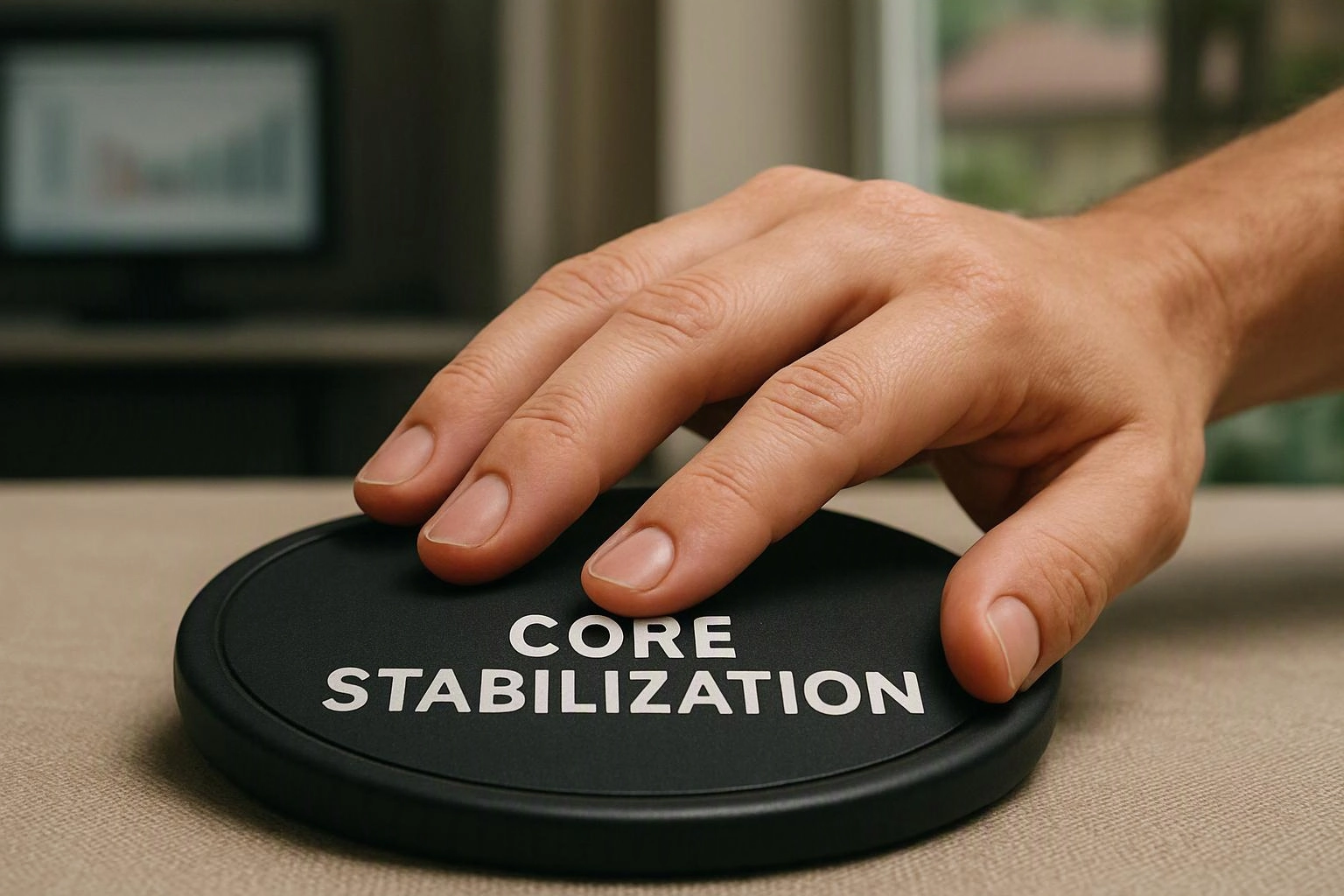
Core Stabilization uses controlled exercise to coordinate the trunk with the pelvis, hips, and limbs. A person may practice maintaining a neutral spine, managing breathing, or moving an arm or leg without losing trunk control. The goal is consistent movement quality during a task.
Related glossary terms: Neutral Spine, Lumbar Spine, Pelvic Floor.
Therapeutic exercise may begin with supported positions and progress toward standing or activity-based movements. A clinician observes posture, breathing, balance, and control during each exercise. The exercise becomes more demanding when the person can maintain the intended position without unwanted shifting or compensation.

From the Arrowhead Clinic Chiropractor Hinesville team
When we use Core Stabilization, we watch how the trunk, pelvis, and hips work together during movement. Our team adjusts the exercise position, resistance, or range of motion when control changes. We connect the exercise to the person’s functional goals, such as lifting, walking, or returning to routine activity.
Core Stabilization in Practice: A Real-World Example
A person with back discomfort may practice keeping the pelvis steady while moving one leg from a supported position. In Therapeutic Exercise, the clinician may then connect that control to a supported squat or careful reaching task.
Related Services
Related Terms
Neutral Spine
Neutral Spine is a balanced position in which the spine keeps its natural curves while the…
Lumbar Spine
The lumbar spine is the lower section of the spinal column between the thoracic spine and…
Pelvic Floor
Pelvic Floor is a group of muscles, connective tissues, and supporting structures that spans the bottom…
Range of Motion
Range of Motion is the available movement of a joint or body part in a specific…
Arrowhead Clinic Chiropractor Hinesville
Have Questions About Core Stabilization?
Contact Arrowhead Clinic Chiropractor Hinesville for practical guidance on Core Stabilization and related chiropractor work in Hinesville.